What pads and rotors each do
Each wheel with disc brakes has a rotor that spins with the wheel and a caliper that straddles it. When you press the pedal, brake fluid pushes the caliper’s pistons, and the caliper squeezes a pad against each face of the rotor. The friction turns the car’s motion into heat, and the car slows.
The two parts share that work very differently. The pad is the sacrificial part: a layer of friction material bonded to a steel backing plate, designed to wear down so the rotor doesn’t. The rotor is the heavy part that has to absorb and shed the heat. It wears much more slowly, but every stop takes a little metal off its surface, and heat can leave it uneven.
Pads typically last 30,000 to 70,000 miles, depending on how and where you drive. Stop-and-go traffic around Ninth Street and Duke, rush hour on the Durham Freeway and hilly roads all wear pads faster than steady highway miles. Rotors usually outlast at least one set of pads, which is why the real question at a brake job is what shape the rotors are in.
4 sounds and sensations that mean brake service now
Your brakes tell you a lot before anything fails. These four are the ones that should get the car booked in rather than put off.
Squeal, grind, pulsation, and a soft pedal
- A steady squeal when you brake usually means the pads are getting thin. Many pads carry a small metal wear indicator that rubs the rotor on purpose. With brake squealing, when to replace is easy: soon, while it’s still just the pads. Leave it too long and the next sound is a grind.
- Grinding or scraping means the friction material is gone, or nearly gone, and the pad’s steel backing is cutting into the rotor. At that point a pad-only job is usually off the table, because the rotor surface has been damaged. Stop driving on it as soon as you can.
- Pulsation through the pedal or a shake in the steering wheel when you slow down usually means the rotor’s thickness is no longer even all the way round. The pads grab the thick spots harder than the thin ones, and you feel it as a pulse. This is a rotor problem, not a pad problem.
- A soft or sinking pedal is not a pad or rotor issue at all. It usually points to the hydraulic side: air or moisture in the fluid, or a leak. Treat it as urgent. Our post on when to replace brake fluid explains why fluid wears out.
Not every brake noise is one of these. Our guide to squealing brakes covers the harmless ones, like the squeak on a damp morning that fades after a few stops.
Resurface or replace? The thickness spec that decides
Every rotor has a minimum thickness set by its manufacturer. It is usually stamped or cast into the rotor itself, often marked “MIN TH” or “MIN THK.” Below that number the rotor holds less heat, warps more easily and can’t be trusted to stop the car the way it was designed to.
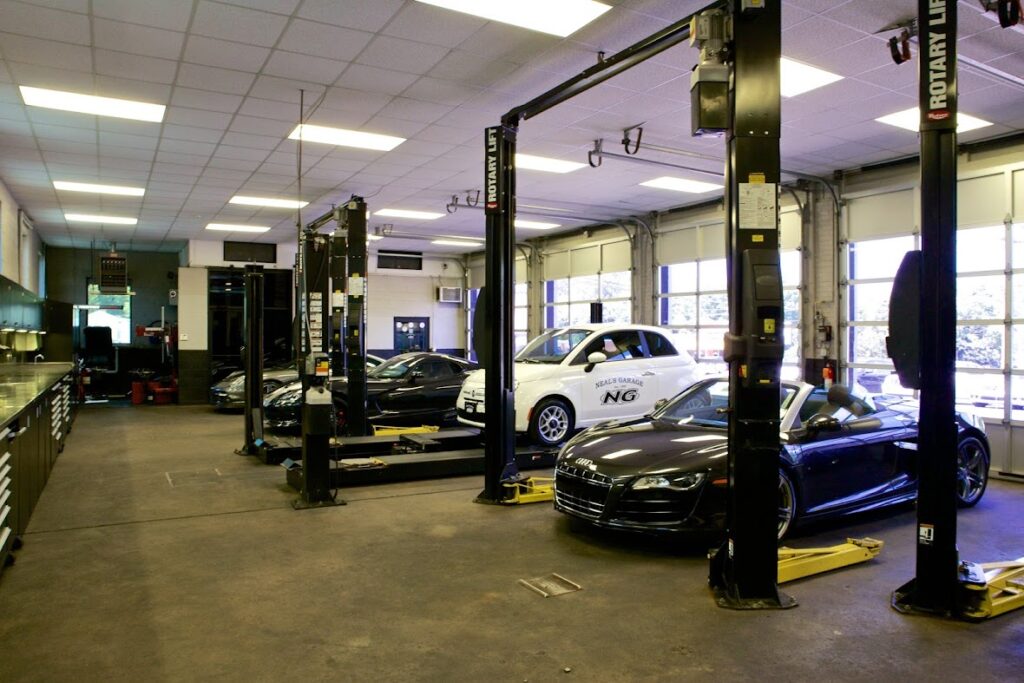
When your car is on the lift, we measure each rotor with a micrometer at several points and compare it with that spec. We also look for anything a measurement won’t show: deep grooves, cracks, heat spots and a worn lip at the outer edge.
- Resurfacing (sometimes called machining or turning) shaves a thin layer off both faces on a brake lathe so the surface is flat and even again. It only makes sense if the rotor will still be above its minimum thickness after the cut, with no cracks or hard spots.
- Replacement is the answer when the rotor is already at or near the minimum, would end up below it after resurfacing, or is cracked, deeply scored or heat-damaged.
Many modern rotors are built thinner and lighter than older ones, so there is often not much metal to spare. We only recommend replacing a rotor when it is worn past the safe minimum or damaged, and we’ll show you the measurement either way.
Brake service cost ranges in Durham, NC
What brake replacement costs in Durham, NC depends mostly on what the inspection finds. Here is how our brake work breaks down:
| Service | Cost | Notes |
|---|---|---|
| Brake inspection | Free | Pads, rotors, calipers, hoses and fluid, checked and explained |
| Brake repair | Typically $150–$600 | Usually 1–3 hours; depends on the parts and vehicle |
| Brake fluid service | $114.95 | Recommended every 30,000 miles |
Where a job lands in that range comes down to a few things:
- Pads only, or pads and rotors. Rotors are the bigger part of the bill, which is why catching worn pads before they grind matters.
- One axle or both. Front brakes do most of the stopping and usually wear first. We quote the axle that needs it, not both by default.
- The vehicle. Larger and performance-oriented cars, trucks and many European models use bigger rotors and pads that cost more.
- Anything else the inspection turns up, such as a sticking caliper or a leaking hose.
You’ll get the exact figure for your car before any work starts. Brakes are also part of the coverage on our Lifetime Protection Plan, which stays in force as long as you keep up with qualifying service like the brake fluid change.
When we recommend pad and rotor replacement together
Putting new pads on a rotor that is near its limit is a false economy. A new pad needs a flat, true surface to bed in against. On a grooved or uneven rotor it wears to match the damage, and the noise or pulsation tends to come back. If the rotor was close to the minimum, it will usually be below it by the next pad change, so you pay for the labor twice.
So we recommend replacing pads and rotors together when the rotor:
- measures at or near its minimum thickness, or would fall below it if resurfaced,
- is causing pulsation that resurfacing can’t remove,
- has been damaged by grinding pads, or shows cracks or heat spots.
If the rotors measure well above their minimum and the surface is smooth, new pads on their own are often the right job, and we’ll tell you so. Replacing parts that still have life in them is not something we push.
Hearing something from the brakes? Start with our free inspection, or read more about brake repair at Neal’s Garage. Call 919-286-1167 or schedule an appointment — we’re open Monday to Friday, 8:00 AM to 5:30 PM at 1907 West Markham Avenue, right off Ninth Street.
Frequently asked questions
Do I always need new rotors when I replace brake pads?
No. We measure each rotor against its minimum thickness. If it is above the minimum, smooth and undamaged, new pads alone are often enough. We recommend new rotors when they are worn past the safe minimum or damaged.
How much does brake repair cost at Neal’s Garage in Durham?
Brake repair typically runs $150 to $600, depending on whether the car needs pads only or pads and rotors, and on the vehicle. The brake inspection is free, and you get the exact price before any work starts.