What’s different about nitrogen?
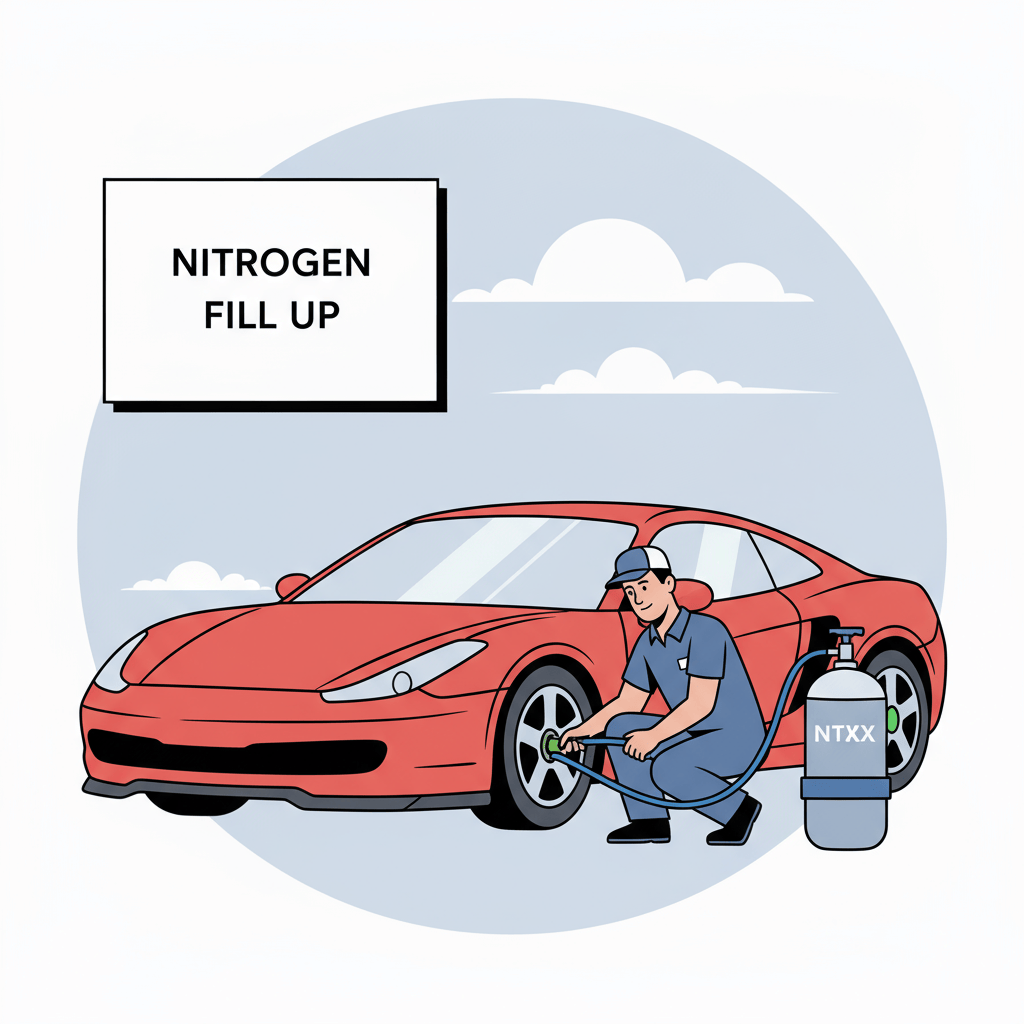
Ordinary compressed air is already mostly nitrogen, with oxygen and a little moisture mixed in. Nitrogen molecules pass through tire rubber more slowly than oxygen, and a nitrogen fill is dry. Those two properties are the whole story: the tire holds its pressure longer, and there’s less moisture inside to corrode the wheel or the pressure sensor.
Why proper pressure matters
- Fuel economy: under-inflated tires roll with more resistance.
- Tire life: wrong pressure wears the tread unevenly.
- Handling and braking: the tire’s contact patch is designed around the right pressure.
Anything that keeps pressure where it should be for longer helps with all three.
Who benefits most?
Drivers who don’t check their tires often, cars with expensive alloy wheels and pressure sensors, and anyone who wants the most consistent handling — which is why nitrogen has long been used in race cars, aircraft and commercial trucks. It works on any car, from an economy hatchback to an SUV.
What nitrogen doesn’t do
It won’t fix a puncture, a leaking valve or a bent rim, and it doesn’t make pressure checks unnecessary. Temperature still moves pressure up and down, so check your tires when the weather turns — our winter car care guide covers that.
Pair it with the rest of your tire care
Nitrogen works best on tires that are wearing evenly: regular tire rotation, Road Force Balancing and a wheel alignment when needed. See how those three differ in Tire rotation vs. balancing vs. alignment.
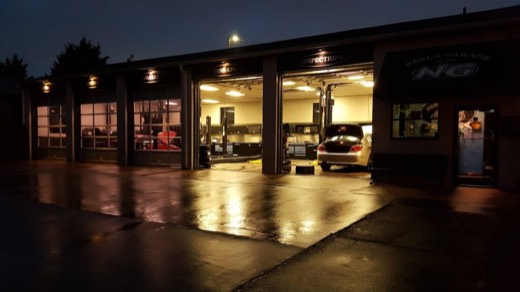
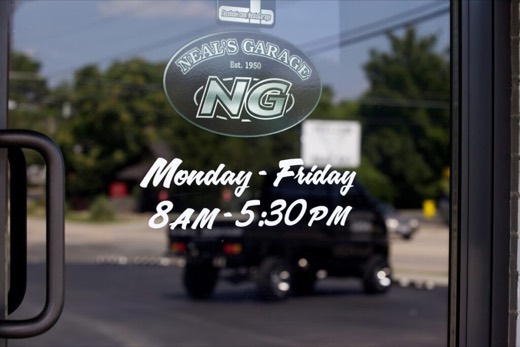
Neal’s Garage offers nitrogen tire fill in Durham. Call 919-286-1167 or schedule an appointment — we’re open Monday to Friday, 8:00 AM to 5:30 PM at 1907 West Markham Avenue, right off Ninth Street.
Frequently asked questions
Do I still need to check tire pressure with nitrogen?
Yes. Nitrogen holds pressure longer than air, but temperature changes still affect it, and punctures or valve leaks still happen.
Can I top up nitrogen-filled tires with regular air?
Yes. Mixing in air is safe; you just lose some of nitrogen’s benefit until the tires are refilled with nitrogen.